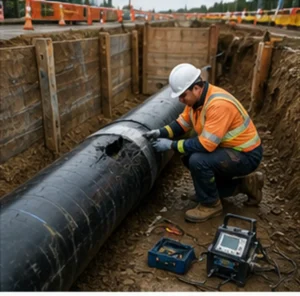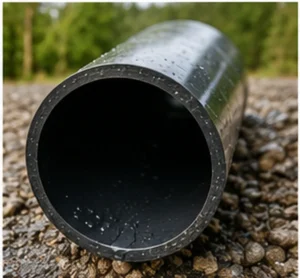
Canada is known for its extreme weather. In provinces across the country, the ground freezes in winter and thaws in spring. This is called the “freeze-thaw cycle.” It can be very hard on underground pipes. When the ground moves, older pipes like PVC can snap or leak. High-Density Polyethylene (HDPE) is different. It is flexible and strong enough to handle shifting soil. From the mountains of BC to the coast of Newfoundland, HDPE keeps our water systems running smoothly.
How does HDPE pipe survive Canada’s freeze-thaw cycles?
HDPE pipe handles freeze-thaw cycles by being flexible and ductile. When water freezes into ice inside the pipe or in the surrounding soil, the HDPE pipe stretches to absorb the pressure. Unlike PVC, which becomes brittle and cracks in the cold, HDPE remains strong and bendable down to -70°C. This allows it to move with the shifting ground without breaking.
Regional Challenges: From British Columbia to the Atlantic
Every Canadian province has a different climate, but the freeze-thaw cycle affects them all.
British Columbia and the Mountains
In BC, heavy rain and mountain runoff can make the ground soft. When that wet soil freezes, it expands quickly. HDPE is perfect here because it can follow the natural curves of the land. Its standard pipe dimensions ensure it has the wall strength to handle the weight of wet, frozen earth.
The Prairies: Deep Frost Lines
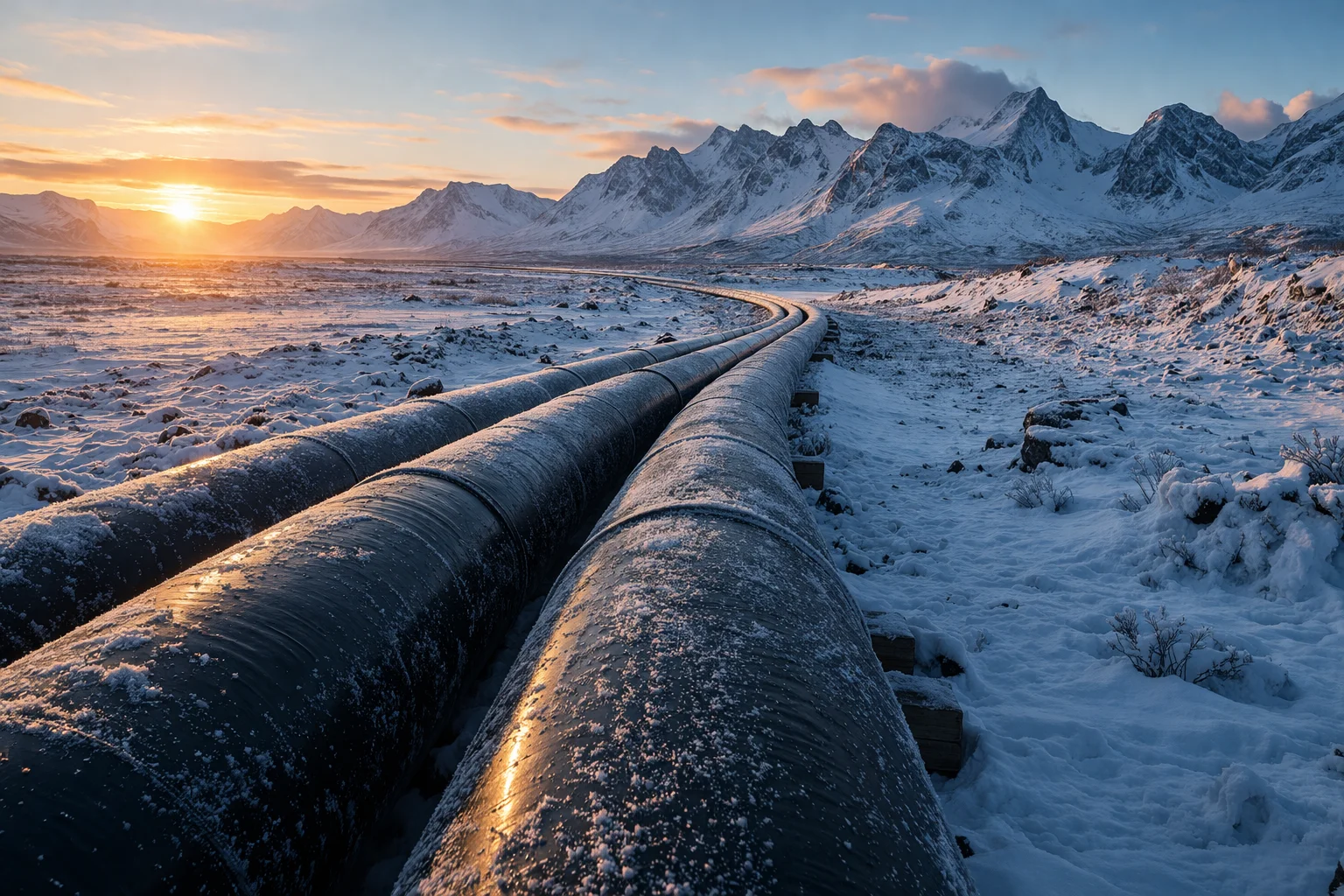
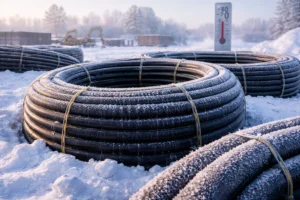
In Alberta, Saskatchewan, and Manitoba, the frost goes very deep into the ground. This puts massive “crushing” pressure on pipes. HDPE is the top choice for these provinces because it doesn’t shatter under pressure. For many of these projects, cold weather and insulated HDPE pipes are used to keep liquids moving even when the air is -40°C.
Ontario and Quebec: Shifting Clay Soils
These provinces often have clay-heavy soil. Clay holds a lot of water, which means it moves a lot when it freezes. This movement is called “frost heave.” HDPE is used in trenchless technology throughout Toronto and Montreal to replace old, cracked water mains that couldn’t handle the shifting clay.
Why HDPE is Better than PVC in the Cold
Most people wonder why we don’t just use PVC. The reason is simple: Cold weather makes PVC weak.
- PVC (Polyvinyl Chloride): When it gets cold, PVC becomes like glass. If the ground moves, the pipe snaps.
- HDPE: It acts more like a heavy-duty rubber. It can bend and stretch. If ice forms inside an HDPE pipe, the pipe grows larger to hold the ice. When it thaws, the pipe goes back to its original size.
The Power of Leak-Proof Joints
One of the biggest problems in the Atlantic provinces is saltwater and shifting coastlines. Standard pipes use rubber gaskets that can leak when the ground shifts.
WGS specializes in HDPE fusion. This process melts the pipes together into one long, solid piece. Because there are no “gaps” or “joints,” there is nowhere for the pipe to leak, even during the wildest spring thaws.
For specialized jobs, we even offer custom HDPE fabrication to build parts that fit perfectly into existing systems.
Comparison: HDPE vs. Traditional Pipe in Winter
| Feature | HDPE Pipe | PVC / Iron Pipe |
| Flexibility | High (Bends with soil) | Low (Stiff) |
| Impact in Cold | Stays strong | Becomes brittle/shatters |
| Joint Type | Heat Fused (Zero leaks) | Gaskets (Can pull apart) |
| Best For | All Canadian Provinces | Warm climates only |
Protecting Canada’s Infrastructure
The cost of fixing a burst pipe in the middle of a Canadian winter is very high. By choosing HDPE, cities and companies save money on repairs. It is the only material designed to handle the “freeze and squeeze” of our northern climate.
Do you need a piping system that can survive the winter?
From custom HDPE manholes to industrial pipelines, WGS Plastic Services has the experience to help.
Contact WGS Plastic Services today or Request a Quote to protect your project from the freeze-thaw cycle.