HDPE pipe is known for long service life, corrosion resistance, and strong performance in demanding systems. Many HDPE pipelines can stay in service for decades when the pipe is designed, installed, joined, and operated correctly. However, there is no single lifespan that applies to every HDPE pipe in many different field applications.
Pressure, temperature, sunlight, chemicals, ground movement, installation quality, and fusion work can all affect how long the pipe lasts. This guide explains the expected lifespan of HDPE pipe, the factors that shorten its life, and practical steps that can help a piping system perform well for many years.
Quick answer: HDPE pipe commonly has an estimated service life of 50 to 100 years. The Plastics Pipe Institute says properly designed, installed, and operated plastic piping systems can exceed 100 years of service. Actual life depends on material, pressure, temperature, chemical exposure, installation, joining quality, and operating conditions.
What Is the Average Lifespan of HDPE Pipe?
For many water and pressure-pipe applications, a useful planning range is 50 to 100 years.
The Plastics Pipe Institute states that the polyethylene pipe industry conservatively estimates HDPE pipe service life at 50 to 100 years for water applications. PPI also says properly designed, installed, and operated plastic piping systems can have service lives beyond 100 years.
That does not mean every HDPE pipe will last 100 years. A service-life estimate assumes the system stays within its design limits.
Can HDPE Pipe Last More Than 100 Years?
Yes, some HDPE systems are designed or projected for service beyond 100 years.
Modern research and industry guidance support 100-year performance for certain HDPE applications when the material and operating conditions are suitable. PPI also reports research supporting more than 100 years for corrugated HDPE drainage pipe.
The important phrase is under the right conditions. Pipe grade, pressure, temperature, installation, and environment all matter.
What Affects HDPE Pipe Service Life?
1. Operating Pressure
Pressure places long-term stress on the pipe wall.
The pipe must have the correct size, wall thickness, and pressure rating for the system. A pipe that operates within its design limits can perform for a long time.
If you are comparing pipe measurements, see the HDPE pipe dimensions guide.
2. Temperature
Higher temperatures can affect the long-term strength of polyethylene.
The temperature of the fluid and the surrounding environment should be considered during system design. Pressure ratings may need adjustment for higher operating temperatures.
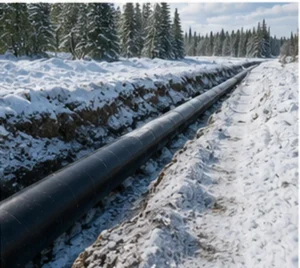
Cold weather creates different challenges. HDPE remains useful in many cold-climate projects, but installation and fusion procedures still need proper control.
Read more about HDPE pipe freeze-thaw performance and cold-weather and insulated HDPE pipes.
3. Fusion and Joint Quality
A long-life pipe system also needs reliable joints.
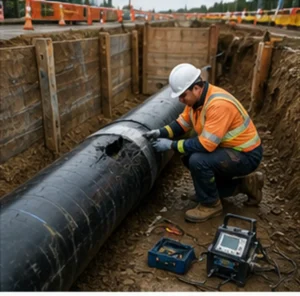
HDPE pipe is often joined by butt fusion or electrofusion. Good fusion depends on correct preparation, clean surfaces, proper equipment, alignment, heat, pressure, and cooling.
Learn more about WGS Plastic Services’ HDPE fusion services and how to fuse HDPE pipes.
4. Installation Quality
Even high-quality pipe can be damaged by poor installation.
Problems may include:
- Deep scratches or gouges
- Poor trench preparation
- Sharp rocks against the pipe
- Excessive bending
- Poor support
- Equipment damage
- Incorrect backfill
Good handling and installation help protect the pipe from early damage.
5. Sunlight and UV Exposure
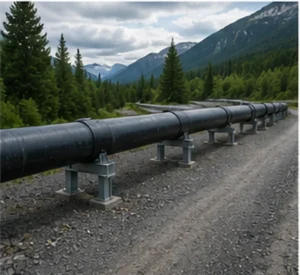
Black HDPE pipe commonly contains carbon black for UV protection. PPI notes that black HDPE is recommended for long-term outdoor exposure.
However, not every polyethylene product has the same UV resistance. Pipe colour, material formulation, and manufacturer guidance matter.
See can HDPE pipe be exposed to sunlight for a closer look at outdoor use.
6. Chemicals and Water Quality
HDPE resists many chemicals and does not rust like metal pipe, but chemical compatibility still matters.
The material being carried, its concentration, and temperature should be checked against the selected pipe material.
For potable water, PPI notes that oxidative performance can be affected by material classification, pipe stress, water temperature, and water quality.
Does Buried HDPE Pipe Last Longer?
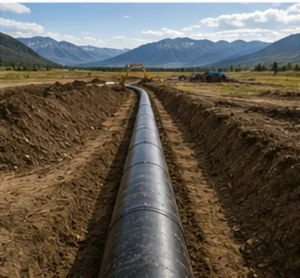
Burial can protect HDPE from sunlight and some forms of physical damage, but buried pipe still depends on correct installation.
Good bedding, backfill, trench design, and support help control stress on the pipe. Ground movement and later excavation can also affect service life.
A buried HDPE line should therefore be treated as a complete engineered system, not simply pipe placed underground.
What Can Shorten the Life of HDPE Pipe?
HDPE service life may be reduced by:
- Operating above design pressure
- Excessive temperature
- Poor fusion joints
- Deep cuts or gouges
- Wrong material selection
- Chemical incompatibility
- Poor installation
- Severe unsupported movement
- Repeated equipment damage
If a line has already been damaged, see how to repair HDPE pipe for common repair methods and when section replacement may be needed.
How Can You Help HDPE Pipe Last Longer?
Start with correct design and material selection.
Then:
- Match the pipe to pressure and temperature.
- Use compatible fittings and materials.
- Follow approved fusion procedures.
- Protect pipe during transport and installation.
- Provide proper bedding and support.
- Check chemical compatibility.
- Inspect exposed systems for damage.
- Repair serious damage correctly.
WGS Plastic Services provides HDPE fusion, custom fabrication, and related plastic piping services for industrial and field projects.
Is HDPE Pipe a Long-Life Piping Material?
Yes. HDPE is widely used where long service life, corrosion resistance, flexibility, and fused joints are valuable.
A common industry estimate is 50 to 100 years, while properly designed systems can be capable of service beyond 100 years. Actual life depends on the complete system and its operating conditions.
For a new piping system, repair, custom component, or fusion project, explore custom HDPE fabrication or request a quote from WGS Plastic Services.